Understanding Senior School Pathways in Kenya: A Guide for Parents and Grade 9 Learners
10 November 2026 · 3 min read · By the SomaRevision team
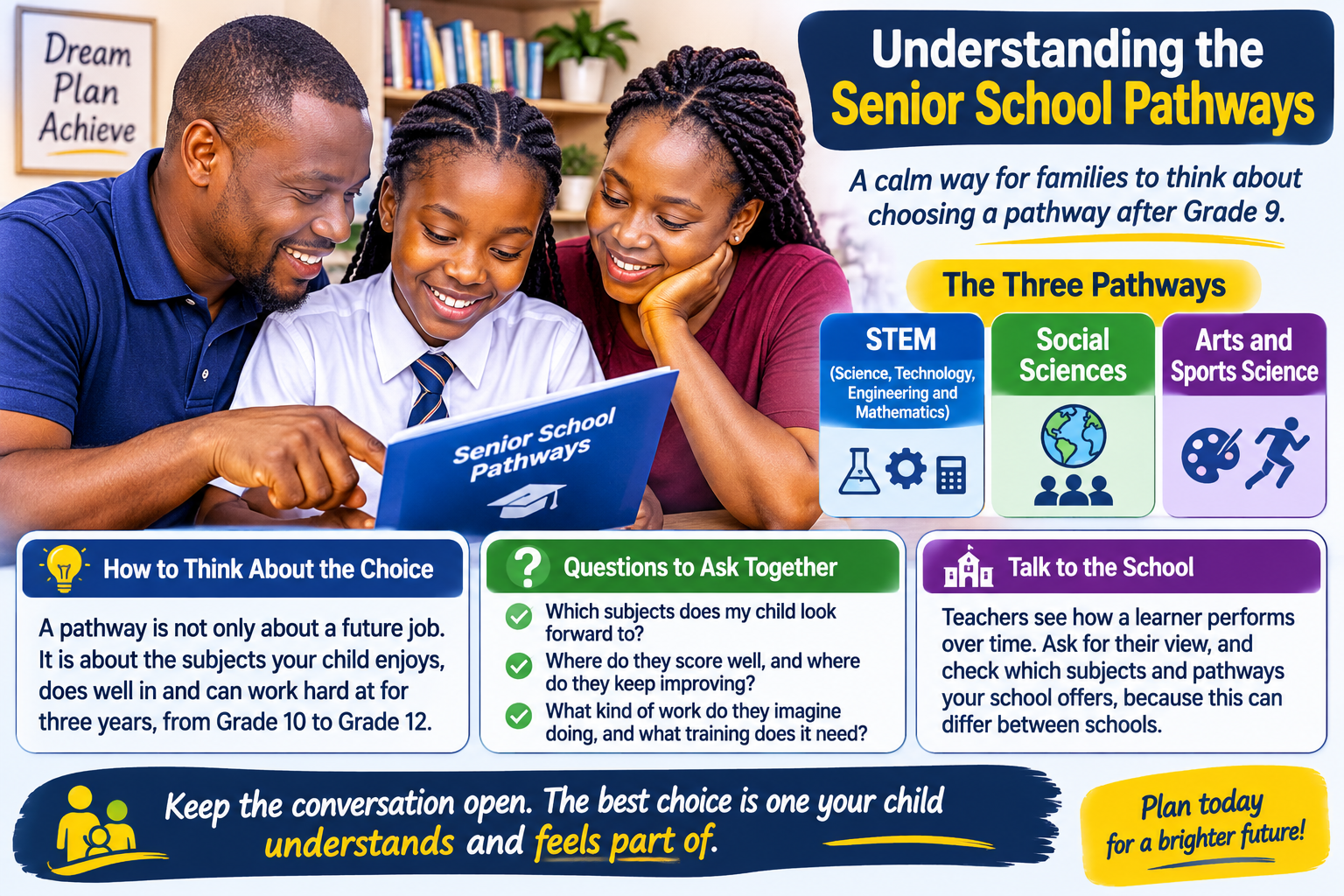
A calm way for families to think about choosing a pathway after Grade 9.
Choosing a senior school pathway is an important milestone in every learner's education journey. After Grade 9, learners transition to senior school, where they choose a pathway that allows them to develop their interests, strengths and abilities.
For parents and learners, this decision can feel overwhelming. However, choosing a pathway does not have to be stressful. With the right information, guidance and open conversations, families can make an informed decision together.
Under Kenya's Competency-Based Education (CBE) system, there are three senior school pathways:
1. STEM (Science, Technology, Engineering and Mathematics)
The STEM pathway is designed for learners interested in scientific exploration, mathematics, technology, engineering and innovation.
It may suit learners who enjoy:
- Mathematics and scientific subjects.
- Understanding how things work.
- Technology, computers and problem-solving.
- Experiments, investigations and practical projects.
2. Social Sciences
The Social Sciences pathway focuses on understanding people, society, communication, relationships and the world around us.
It may interest learners who enjoy:
- History and understanding different societies.
- Languages and communication.
- Studying human behaviour and social issues.
- Exploring business, culture and community development.
3. Arts and Sports Science
This pathway provides opportunities for learners to develop their creative, artistic and sporting abilities.
It may suit learners who enjoy:
- Music, drama and creative expression.
- Drawing, design and visual arts.
- Sports, physical activity and fitness.
- Developing artistic or athletic talents.
How Should You Choose the Right Pathway?
A pathway should not be selected simply because it is popular or because someone believes it offers the highest-paying careers.
Instead, consider the subjects your child enjoys, performs well in and is willing to work hard at throughout senior school, from Grade 10 to Grade 12.
The best starting point is to understand your child's interests, strengths and ambitions.
Questions Parents and Learners Should Ask Together
Before making a decision, have an open conversation using these questions:
- Which subjects does my child genuinely enjoy?
- Where does my child perform well, and which areas are showing improvement?
- What activities or learning experiences motivate them?
- What careers or areas of work interest them?
- What training, skills or further education might those interests require?
There is no need to have every career decision figured out at this stage. The aim is to make a thoughtful choice based on the learner's current interests and potential.
Talk to Teachers and the School
Teachers understand a learner's academic progress, interests and classroom participation over time. Their guidance can help parents and learners make a more informed decision.
It is also important to check which subjects, combinations and pathways are actually available at the school being considered. Availability may differ between schools.
Do not hesitate to ask questions or seek clarification before making the final decision.
A Decision Your Child Should Be Part Of
Choosing a senior school pathway is not just a parent's responsibility. Learners should understand their options and participate actively in the decision.
Avoid comparing your child with siblings, friends or other learners. Every child has different strengths, interests and ambitions.
Keep the conversation open. The best pathway is one that reflects your child's abilities, interests and aspirations, and one they understand and feel part of.
At SomaRevision, we believe every learner deserves the guidance and opportunity to discover their potential.
Put it into practice
Test yourself with a free quiz, or find a past paper for your grade.